
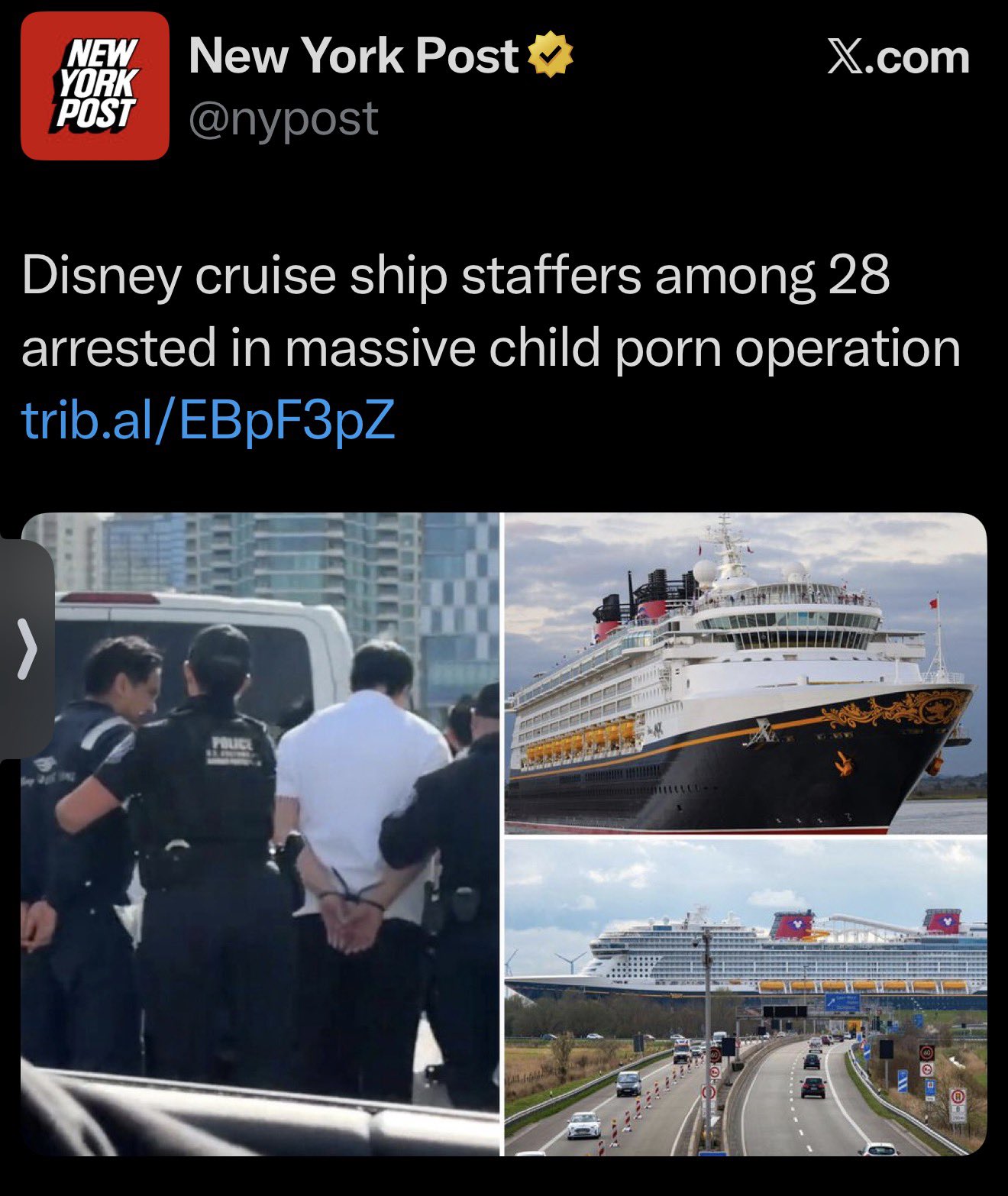
In late April 2026, federal agents from U.S. Customs and Border Protection (CBP) and Homeland Security Investigations (HSI) conducted a targeted operation at the Port of San Diego that resulted in the detention and deportation of 28 foreign cruise ship crew members for alleged involvement with child sexual exploitation material (CSEM), commonly referred to as child pornography.
The bust, part of an ongoing enforcement effort dubbed “Operation Tidal Wave,” has drawn widespread attention—especially because some of the arrested workers were employed by Disney Cruise Line.
What Happened: The Details of the Operation
Between April 23 and April 27, 2026, CBP officers boarded eight cruise ships docked at the San Diego Cruise Ship Terminal. They interviewed 28 crew members suspected of involvement in CSEM offenses. Of those:
- 26 were from the Philippines
- 1 was from Indonesia
- 1 was from Portugal
According to official statements from CBP, 27 of the 28 individuals were confirmed to have been involved in the “receipt, possession, transportation, distribution, or viewing” of child sexual exploitation material. Ten of the detained crew members worked aboard the Disney Magic, one of Disney Cruise Line’s vessels.
All 28 had their visas immediately revoked and were removed from the United States. No U.S. citizens were involved, and the operation focused exclusively on foreign crew members already working on the ships.
The New York Post first broke the story with the headline “Disney cruise ship staffers among 28 arrested in massive child porn operation,” sparking millions of views and thousands of reactions online.
Disney’s Official Response

Disney Cruise Line issued a statement confirming that a small number of its employees were among those arrested. The company emphasized:
- Full cooperation with federal authorities
- Immediate termination of the involved crew members
- A strict zero-tolerance policy for any form of child exploitation
Disney stressed that the majority of the arrested individuals worked for other cruise lines, but the brand’s name inevitably drew the most public scrutiny.
Why This Story Resonated So Strongly

Cruise ships are floating cities filled with families, children, and entertainment aimed squarely at kids. The idea that crew members entrusted with serving those families could allegedly possess or distribute child exploitation material hits a particularly raw nerve. Public reaction on X (formerly Twitter) was swift and intense:

- Many users expressed shock and disgust, with comments like “Disney seems to attract an awful lot of child abusers” and “Never forget Disney cruises used to visit Epstein Island.”
- Others highlighted broader cruise industry vulnerabilities: long contracts, international crews, and limited oversight while at sea.
- Some pointed to contrasting media headlines—some outlets framed it as an “ICE raid,” while others correctly described it as a targeted child exploitation investigation.
The story also reignited ongoing conversations about background screening for foreign cruise workers who interact daily with American families.
The Bigger Picture
This wasn’t a random sweep. It was part of a deliberate, ongoing federal effort to combat child sexual exploitation material on vessels entering U.S. ports. CBP and ICE have conducted similar operations before, but the involvement of a high-profile family brand like Disney amplified the coverage.
Federal officials have not released the specific roles the arrested crew members held (e.g., cabin stewards, entertainers, kitchen staff), citing the ongoing nature of the investigation. What is clear is that the material was allegedly discovered on personal devices during routine or targeted inspections.
Final Thoughts
Incidents like this serve as a stark reminder that no industry—especially one catering directly to children—is immune to bad actors. While Disney and other cruise lines maintain they have rigorous hiring and screening processes, this case shows that determined enforcement by CBP and ICE remains essential.
Parents planning family cruises may want to ask tougher questions about crew vetting. Travelers should also remember that federal agents are actively monitoring these vessels for exactly this kind of criminal activity.
In the end, 27 individuals who allegedly traded in the worst kind of illegal content are no longer in the United States. That’s a win for child protection—even if it comes with uncomfortable questions for the cruise industry.
Stay informed. Stay vigilant. And if you’re booking a cruise with kids, do your homework.
Sources: Official statements from CBP, ICE, Disney Cruise Line, New York Post, Fox News, and local San Diego reporting (May 2026).
Leave a Reply
You must be logged in to post a comment.