
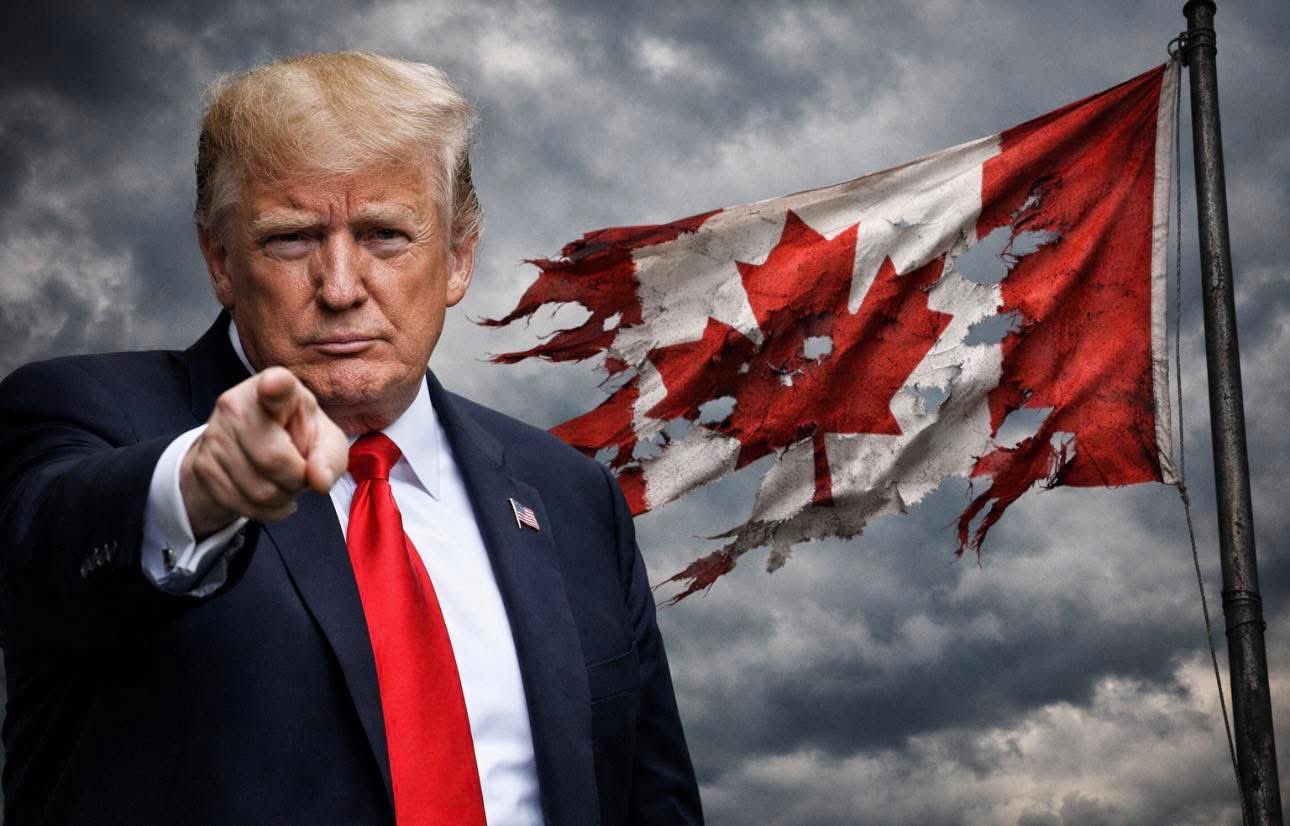
Donald Trump’s threat of 100 percent tariffs if Canada deepens trade with China has been dismissed, predictably, as bullying. Mean. Crude. Intimidation over diplomacy.
That reaction misses the point, and lets Canada’s political class off the hook yet again.
What matters is why Canada is so vulnerable to it, and why Trump is doing exactly what power looks like when it is used deliberately, not apologetically.

For years, Canada told itself a comforting story. That we were post-power. That rules had replaced leverage. That globalization was neutral and markets were immune to geopolitics. We convinced ourselves we could drift closer to China, hedge against the United States, and still enjoy automatic, permanent access to the American market, a market that accounts for roughly 80 percent of our trade and more than $500 billion in goods moving each way every year.
That belief wasn’t naïve. It was negligent.
The old order never disappeared. Canada just stopped respecting it.
Trade today is not about friendship. It is about pressure points. It is about courts, compliance, standards, supply chains, data, and ownership. It is about who writes the rules and who enforces them. Trump understands that. Canada’s leadership pretended it no longer mattered.
This is not about China as a moral question. It is about China as a strategic actor, one that uses market access, subsidies, intellectual-property capture, and state leverage as tools of national power. The United States treats that reality seriously. Canada largely outsourced thinking about it.
Trump is not demanding obedience. He is enforcing alignment, the same alignment Canada has benefited from for generations while refusing to carry the responsibility that comes with it.
Canada treated access to the U.S. market as an entitlement instead of a strategic asset. We built world-class research, innovation, and talent, then sold off ownership and control. We allowed foreign entities to absorb Canadian intellectual property, data, and platforms while telling ourselves that “investment” was the same as sovereignty. It isn’t.
When Trump applies pressure, he is not creating this vulnerability. He is revealing it.
And that is why his move lands so hard.
🚨 BREAKING: President Trump just posted a BOMBSHELL video proving Canada is "systematically destroying itself"
— Eric Daugherty (@EricLDaugh) January 25, 2026
"The China deal is a disaster for them. Will go down as one of the worst deals, of any kind, in history. All their businesses are moving to the USA. I want to see… pic.twitter.com/pxGa45Ou6J
Canada’s political class reacts with outrage because outrage is easier than accountability. It is easier to accuse Trump of bullying than to admit decades of strategic complacency, regulatory capture, and dependency dressed up as diplomacy.
Trump is reacting to a system Canada refused to take seriously. In doing so, he is forcing Canadians to confront a truth our leaders avoided: sovereignty is not a slogan. It is ownership. It is leverage. It is the ability to say no because you planned ahead.
This is not about choosing Trump over China, or America over autonomy. It is about choosing reality over denial.
Trump is doing what power does, clarifying consequences. Canada now has a choice: continue pretending that trade is neutral and politics stops at the border, or finally confront how exposed, indebted, and strategically hollow we have allowed ourselves to become.
If this moment feels uncomfortable, that is not because Trump is cruel.
It is because he is showing Canadians, in the bluntest possible way, how badly their own government failed to protect what mattered.
And once you see that clearly, it becomes impossible to unsee.
-Rich Angel-
Leave a Reply
You must be logged in to post a comment.