
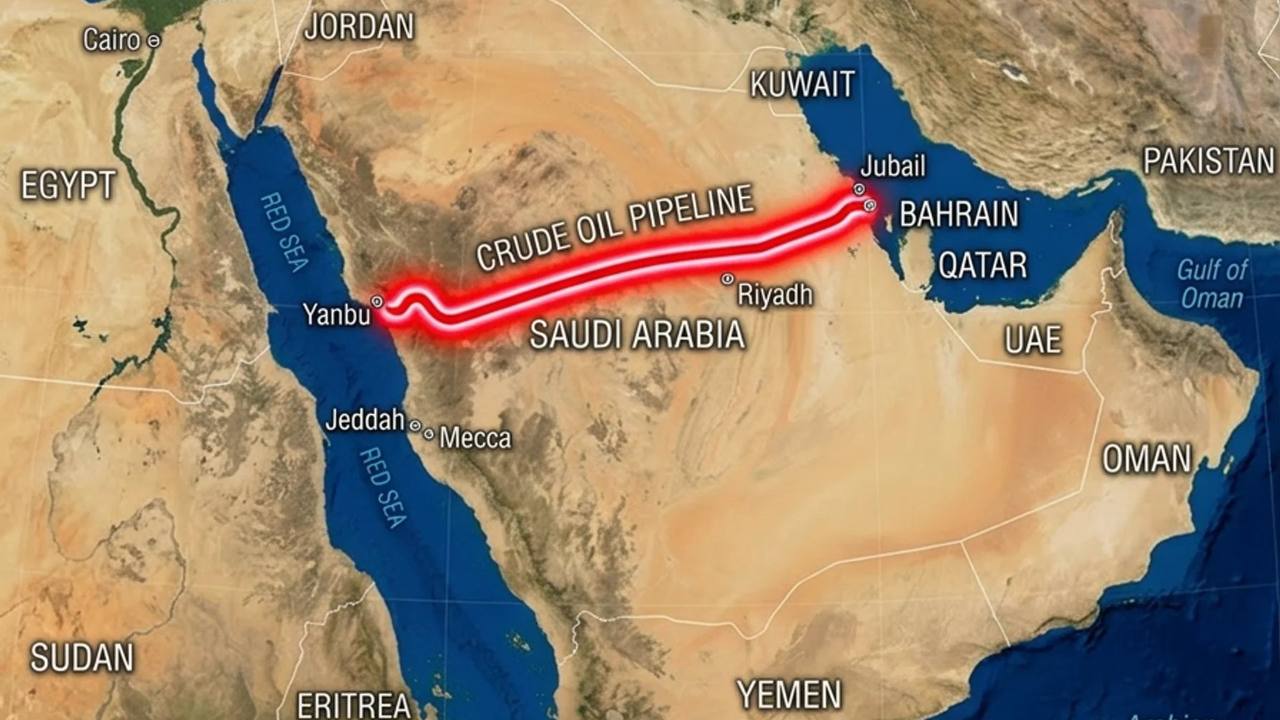
While the world panicked about the Strait of Hormuz, Saudi Arabia already had a backup plan. A 1,200 km pipeline across the desert Persian Gulf ➝ Red Sea Built in 1981 to bypass Hormuz entirely.
Now running at full capacity. Up to 7 million barrels of oil per day flowing west.
- Saudi Arabia’s East-West Crude Oil Pipeline, operational since 1981, spans 1,200 km from the Persian Gulf to the Red Sea and is now at full 7 million bpd capacity to circumvent Iran’s Strait of Hormuz closure declared on March 4, 2026.
- While helpful, the pipeline offsets only about 33% of normal Hormuz traffic (21 million bpd total), as confirmed by Aramco’s recent expansions and market analyses, leaving global oil supplies vulnerable to prolonged disruptions.
- The post from an Israel-focused account celebrates Saudi foresight against Iranian threats, but replies note risks like pipeline sabotage and Houthi interference in the Bab-el-Mandeb Strait, highlighting incomplete regional safeguards.
🚨 While the world panicked about the Strait of Hormuz, Saudi Arabia already had a backup plan.
— Mossad Commentary (@MOSSADil) March 15, 2026
A 1,200 km pipeline across the desert
Persian Gulf ➝ Red Sea
Built in 1981 to bypass Hormuz entirely.
Now running at full capacity.
Up to 7 million barrels of oil per day flowing… pic.twitter.com/cfsQywKVwv
Leave a Reply
You must be logged in to post a comment.