
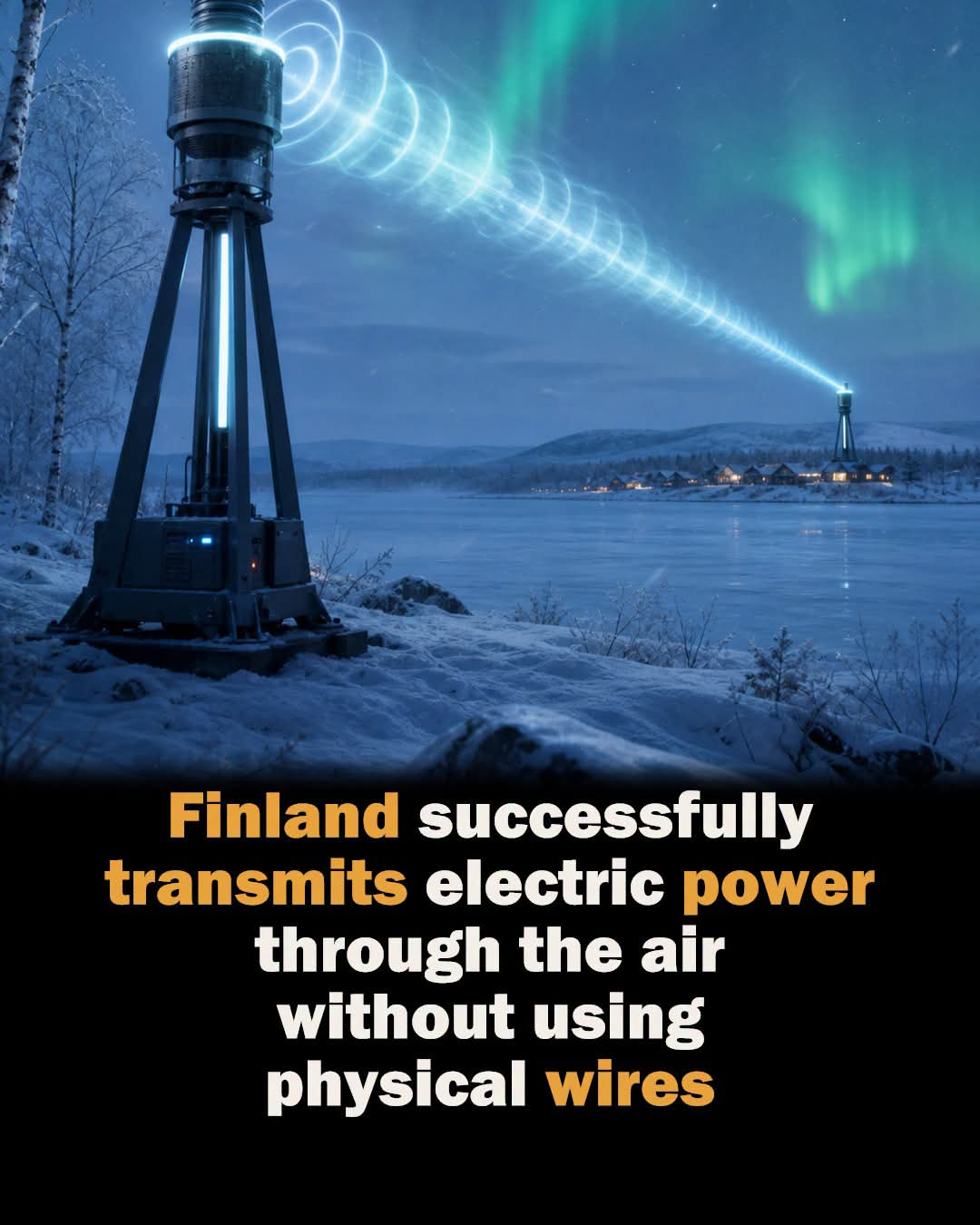
For well over a century, the rules of the electrical grid haven’t changed much: if you want power somewhere, you have to run a wire to it. Now, researchers in Finland are showing what happens when you leave the cables behind altogether.
Across a set of breakthroughs anchored at the University of Helsinki and the University of Oulu, Finnish scientists are tackling wireless power transfer from three different angles—using sound, light, and ambient radio waves to move electricity through open air.
Guiding Lightning with Sound
Sending an electric spark through the air usually looks like lightning: jagged, chaotic, and impossible to aim without a wire. To solve that, researchers at the University of Helsinki and the University of Oulu turned to acoustics.
By firing high-intensity ultrasonic waves, the team carved an invisible channel of lower-density air between two points. Because electricity follows the path of least resistance, an electric spark travels cleanly right down that acoustic corridor instead of arcing unpredictably. It’s a way to create a temporary, invisible “wire” made of nothing but air—and it drops away the moment the sound stops.
Lasers Where Wires Can’t Go
When you need steady power across a room or inside a hazardous facility, sound gives way to light. With power-by-light systems, focused laser beams carry energy straight through the air to specialized photovoltaic receivers that convert it back into electricity.
The real advantage here isn’t just the convenience—it’s safety and isolation. In environments like nuclear power plants or high-voltage substations, running a metal conductor creates a dangerous path for surges, shorts, and interference. A beam of light delivers power across the gap with complete electrical isolation.
Harvesting the Airwaves Around Us
Not every device needs a high-power beam or a guided spark. For the billions of tiny sensors spreading across factories, buildings, and cities, radio-frequency (RF) harvesting offers a quieter revolution.
By pulling microwatts of energy out of the ambient radio waves already bouncing around us from Wi-Fi, cellular networks, and broadcast towers, low-power sensors can run indefinitely without ever needing a cord or a battery swap. At scale, that means retiring millions of disposable sensor batteries that would otherwise require constant maintenance and end up in landfills.
The Takeaway
Put all three great ideas together—ultrasonic channels for guided sparks, lasers for isolated high-consequence environments, and RF harvesting for everyday sensors—and the picture becomes clear. The future of electricity isn’t just about how we generate power; it’s about finally cutting the cord on how we deliver it.
Leave a Reply
You must be logged in to post a comment.