
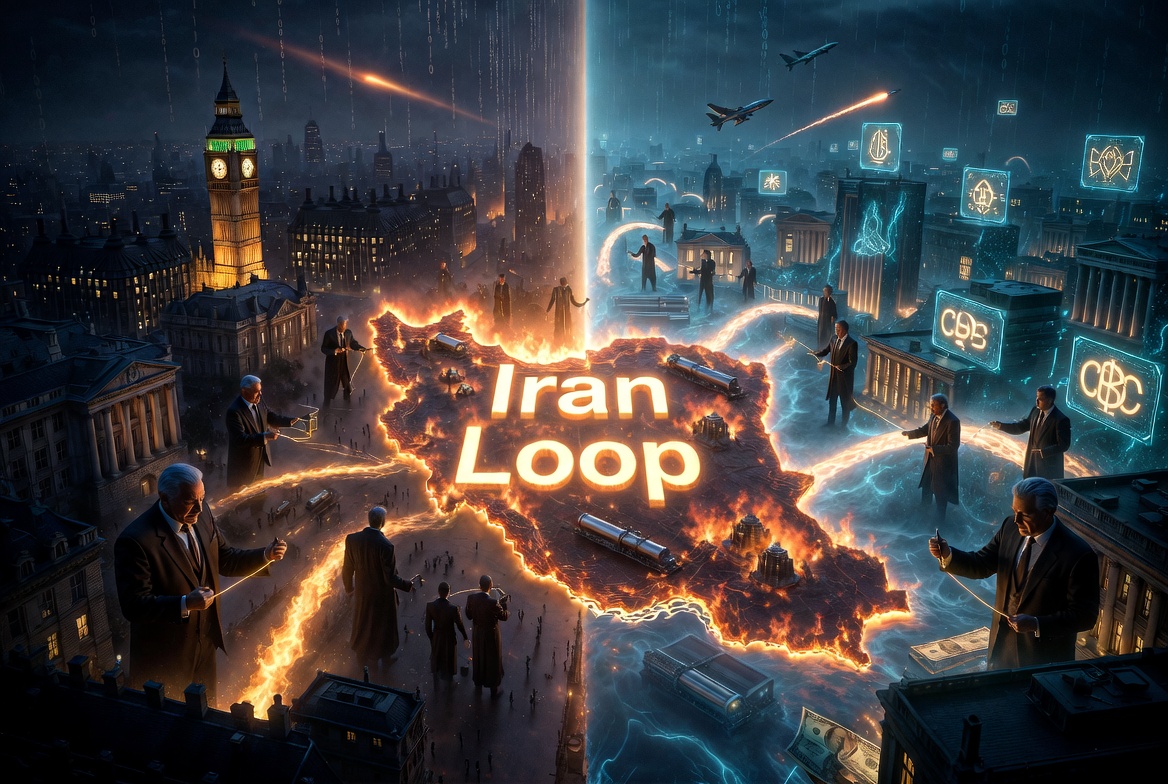
The 2026 Iran War came fast and hard. On February 28, the United States and Israel launched coordinated airstrikes under Operations Epic Fury and Roaring Lion. Targets included nuclear facilities, missile sites, IRGC command centers, and senior leadership—reports confirm Supreme Leader Ali Khamenei was among those eliminated. By early April, a fragile ceasefire held after weeks of strikes that degraded Iran’s nuclear ambitions, proxy networks, and military infrastructure. Official narratives framed it as a necessary strike against an existential threat: a nuclear-armed Iran destabilizing the region.
But what if the real fight wasn’t just about nukes or ideology?
What if it was about liquidity, leverage, and who controls the world’s untracked money flows?
That’s the explosive claim making rounds on X right now, courtesy of @TheShadowIntelX. On May 4, the account posted a screenshot from a March 2026 4chan /pol/ thread. An anonymous poster laid out what he called the real reason for the war: a brutal intra-elite battle between “old money” central bankers and “Silicon Valley neo-feudals” over Iran’s role as a secret offshore financial battery.

The “Iran Loop” – Iran’s Alleged Shadow Banking Lifeline
According to the anon, Iran isn’t just a rogue state—it’s an indispensable “off-shore battery” for London’s shadow banking system. Here’s the core of the theory:
- IRGC energy credits (from sanctioned oil sales) are swapped through Omani banks and other Gulf intermediaries.
- These credits become collateral for unhedged repo loans and synthetic obligations in London markets.
- The loop provides massive, untracked liquidity that props up Western debt, suppresses inflation signals, and keeps leverage ratios afloat in the repo markets.
- Without it? Systemic collapse for over-leveraged old-money institutions.
The poster claims sanctions aren’t walls—they’re tolls. Only the biggest banks can navigate the compliance costs, turning evasion into a profitable racket for insiders while the loop keeps flowing. Seizing Iran’s central bank gold reserves would be the ultimate prize: wiping out the last major off-grid stash.
Two Elite Factions at War
The anon frames the conflict as a factional civil war inside the global power structure:
- Faction A (Old Money Central Bankers): They want to preserve the Iran loop at all costs. It’s their quiet backstop for managing the post-2008 debt supercycle. Cutting it off risks a liquidity crunch that could cascade through London and beyond.
- Faction B (Silicon Valley Neo-Feudals): They want regime change to sever the loop entirely. Why? A global default triggered by the collapse would force the world onto fully tracked CBDCs. No more unmonitored parallel systems. Total control via tech-led “great reset.”
The war, per this theory, wasn’t accidental. It was the kinetic escalation of a financial power struggle.
Real-World Echoes: Enter “Operation Economic Fury”
What makes this 4chan drop more than just tinfoil entertainment is how neatly it lines up with recent events.
In late April and early May 2026, the U.S. Treasury rolled out “Economic Fury”—a fresh wave of sanctions explicitly targeting Iran’s shadow banking networks. The Office of Foreign Assets Control (OFAC) designated dozens of exchange houses, rahbar companies, front entities, and individuals moving billions in foreign currency from illicit oil sales (often settled in Chinese yuan). These are the exact mechanisms the anon described: channels that let the IRGC and regime access global finance despite sanctions.
Treasury statements describe these networks as “critical financial lifelines” for Iran’s war machine and proxies. But in the context of the 4chan post, they look suspiciously like the infrastructure of that alleged “Iran loop.”
Coincidence? Or confirmation that the financial noose tightening around Iran’s shadow system is the real endgame?
Why This Matters
If there’s even a kernel of truth here, the implications for offshore finance, energy arbitrage, and alternative settlement systems are huge:
- Oman and Gulf intermediaries just got a spotlight. Any structure relying on similar swap/collateral channels could face heightened scrutiny.
- CBDC acceleration: A clean break from untracked liquidity would hand Silicon Valley-aligned players exactly what they want—programmable money and total visibility.
- Sanctions as business model: The “tolls not walls” framing explains why certain mega-banks thrive while smaller players get crushed. Compliance has become the ultimate moat.
- Gold and hard assets: The push to seize Iran’s central bank reserves fits the pattern of neutralizing off-grid stores of value.
Whether the anon is a genius insider or an AI-assisted larper (plenty of replies on X are calling it exactly that), the theory forces a deeper question: How much of modern geopolitics is really theater for financial power plays?
Wars move money. Always have. The 2026 Iran conflict dismantled a nuclear threat on paper—but it also created the perfect cover to rip out a parallel financial artery that some factions apparently wanted gone.
Keep watching the sanctions lists. Watch the repo markets. And watch how quickly the conversation shifts from “regime change for democracy” to “financial reset for stability.”
The real game was never on the battlefield. It was always in the ledgers.
What do you think—old money preserving the loop, or neo-feudals forcing the reset? Drop your take in the comments. And if you’re structuring offshore right now, this is the moment to stress-test every exposure to energy credits, Gulf intermediaries, and untracked collateral flows.
Stay sharp out there.
Leave a Reply
You must be logged in to post a comment.